
Creating Human-First Content That Beats AI-Generated Spam in 2026
The internet has changed a lot in the last few years. Today, anyone can create blog posts, social media captions, product descriptions, and even full websites within minutes using AI tools.
At first, this looked like a huge advantage for businesses. Many companies believed they could publish hundreds of articles quickly and rank on search engines without spending much time or money.
But things did not go exactly as planned.
Soon, the internet became filled with repetitive and low-value content. Many articles looked the same, shared the same ideas, and gave the same basic advice. Readers started noticing this, and search engines noticed it too.
Because of this, a new approach to content has become important in 2026: human-first content.
Human-first content focuses on helping real people instead of just trying to please search engine algorithms. It focuses on real experience, useful advice, and honest insights.
For small businesses and startups, this shift is actually good news. You do not need to compete with large companies that publish thousands of automated articles. Instead, you can stand out by sharing knowledge, experiences, and ideas that only humans can provide.
In this blog, we will explore why the AI content flood is backfiring, what human-first content really means today, and how businesses can create valuable content that people actually trust.
The AI Content Flood and Why It Is Backfiring
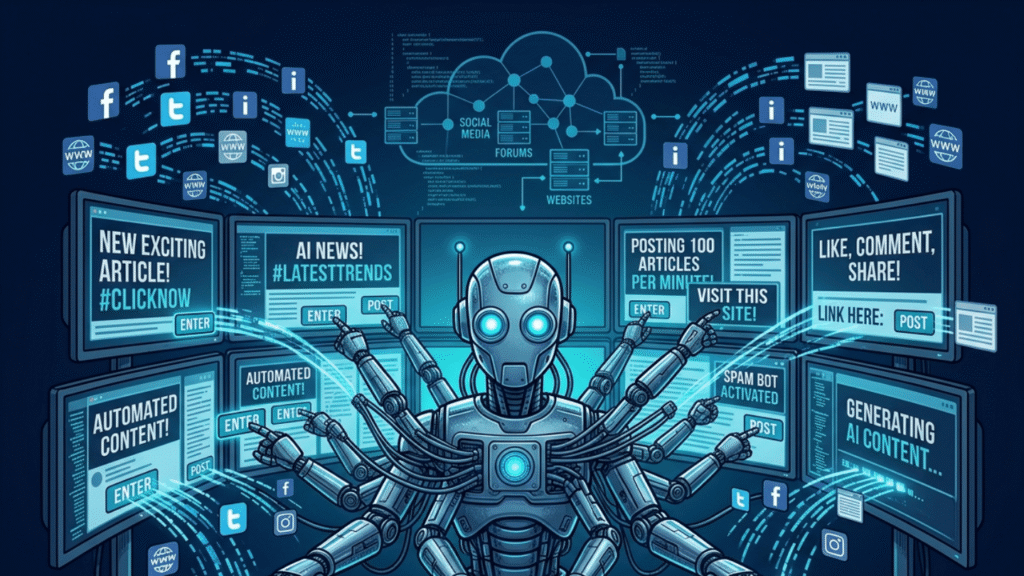
Over the past few years, AI writing tools became extremely popular. Businesses started using them to produce blog posts, SEO articles, and marketing content at a very fast speed.
This created what many marketers now call the AI content flood.
Thousands of websites started publishing large amounts of content every day. The problem was that most of this content looked very similar. Many articles repeated ideas that were already available online.
Instead of offering new insights, these pages often gave the same general advice again and again.
Search engines began responding to this problem.
In 2024, search engines introduced updates to reduce scaled content abuse, which means creating large amounts of content mainly to manipulate search rankings rather than help users. Google explained this clearly in their update about spam policies and scaled content abuse in the article “Expanding our spam policies to include scaled content abuse.”
What web creators should know about our March 2024 core update and new spam policies | Google Search Central Blog
Because of these updates, many websites that relied heavily on automated content started losing traffic.
Some reports showed that websites using thousands of AI-generated articles lost more than 80% of their organic traffic after algorithm updates. This trend was discussed in an SEO analysis about the Helpful Content update and AI-generated websites.
Lost Traffic After Google’s Helpful Content Update?
Readers also began feeling overwhelmed by repetitive content. When every article says the same thing, it becomes difficult to find information that is truly useful.
This is exactly why human-first content is becoming more important.
What Human-First Content Really Means in 2026
Many people think human-first content simply means content written by a human instead of a machine.
But the idea goes deeper than that.
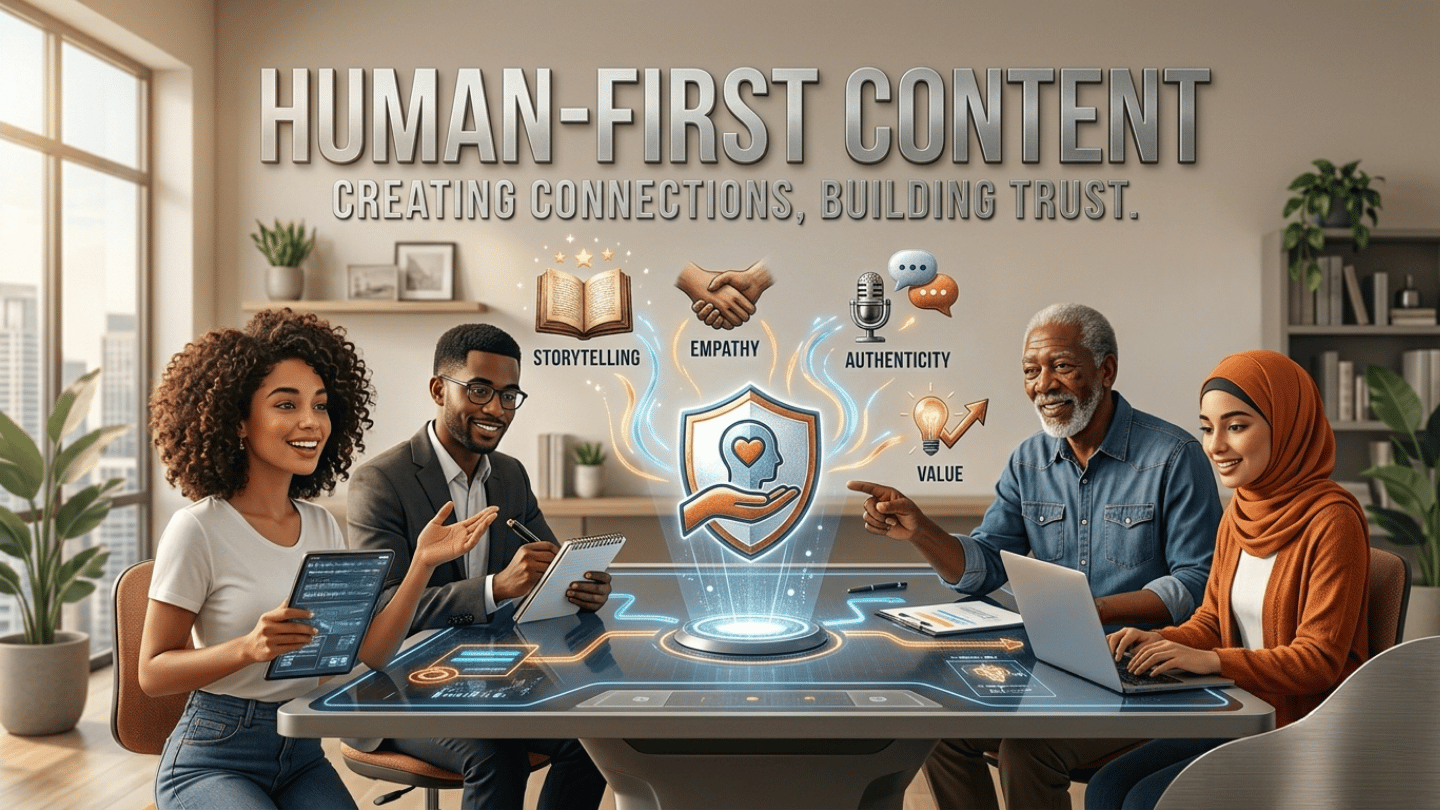
Human-first content means creating information that is designed to genuinely help people.
It focuses on answering real questions, solving real problems, and sharing real experiences.
Search engines now look for signals that show whether content is trustworthy and helpful. These signals often relate to things like:
- real experience
- knowledge about the topic
- credibility of the writer
- trustworthiness of the information
Google explains these ideas in their guidelines about Experience, Expertise, Authoritativeness, and Trust (E-E-A-T) which are used to evaluate content quality.
Creating Helpful, Reliable, People-First Content | Google Search Central | Documentation
When content clearly shows these qualities, it becomes easier for search engines to see it as valuable.
For example, imagine two articles about digital marketing.
The first article simply explains basic ideas that can be found everywhere online.
The second article explains how a marketing campaign worked, what mistakes were made, and what results were achieved.
The second article feels more useful because it shares real experience.
That is the main idea behind human-first content. It focuses on insight, clarity, and value rather than just producing text.
Another important part of human-first content is simple and clear language.
Not every reader is an expert. Many small business owners just want clear answers and practical advice they can understand easily.
Content written in simple language often connects better with readers.
Why Pure AI Content Is Losing Rankings
AI tools can generate text very quickly. However, they still struggle in some areas that are important for high-quality content.
This is one reason human-first content is gaining more attention.
One common problem with automated content is the lack of originality.
AI systems learn from large amounts of existing data. Because of this, they often repeat ideas that already exist instead of creating new insights.
When many websites use similar prompts, their articles become almost identical.
Search engines try to avoid showing the same information again and again, so they often prefer content that adds something new.
Another issue is accuracy.
AI tools sometimes produce incorrect or outdated information. Without human review, these mistakes can reduce the reliability of an article.
Reader trust is also important.
Research shows that many people are still cautious about AI-generated information and prefer content that comes from human expertise. A report discussing public trust in AI content highlights this concern.
https://asone.ai/blog/how-ai-content-impacts-seo
When readers feel that an article is written by someone who understands the topic, they are more likely to trust it.
This is another reason why human-first content performs better in the long run.
Core Elements of Human-First Content That AI Cannot Fake
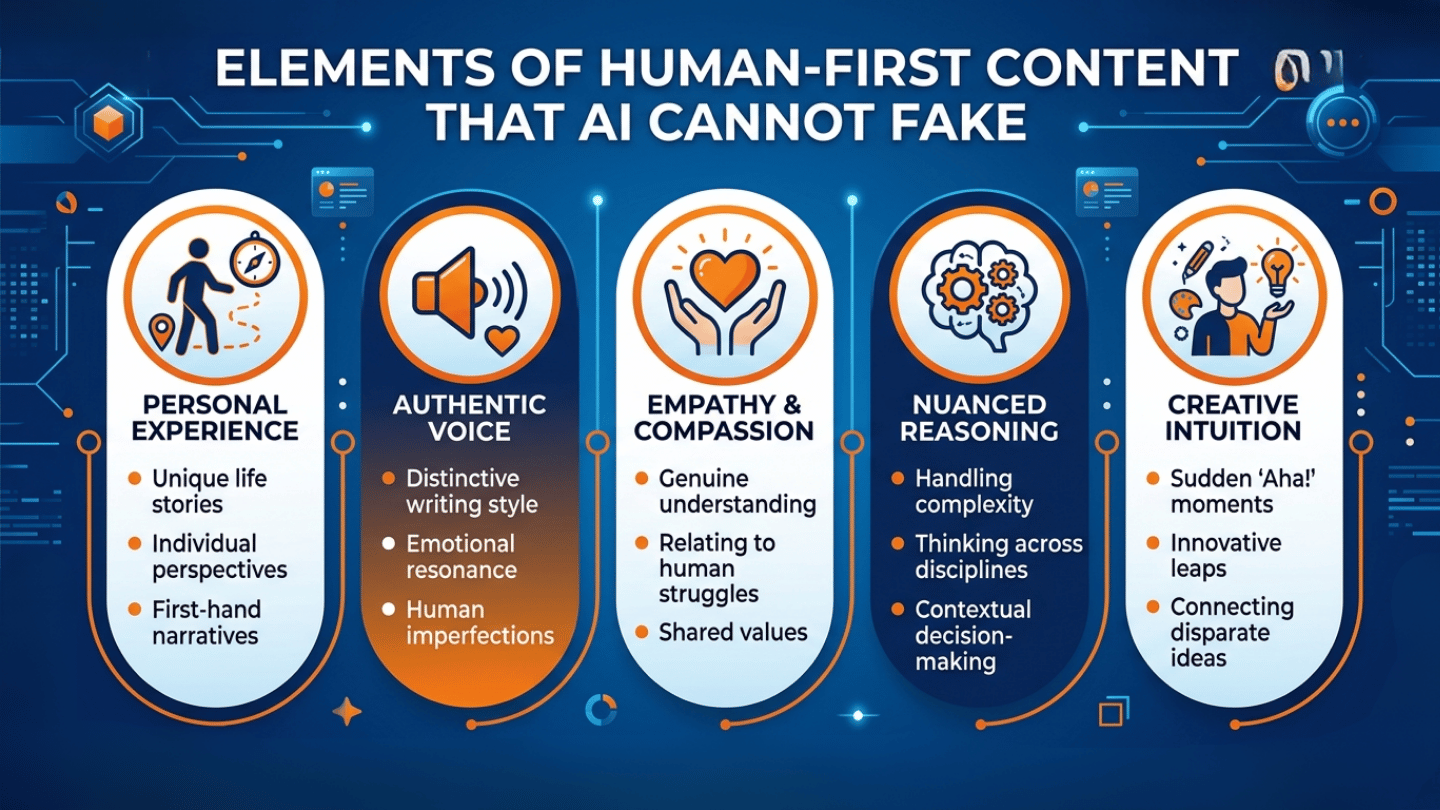
Even though AI technology is improving, there are still several things that humans do better when creating content.
These elements are the foundation of human-first content.
Real Experience
Humans can share personal experiences.
For example, a business owner can explain how they improved website traffic or how a marketing campaign performed.
These real stories provide practical learning for readers.
Google’s documentation on helpful content specifically encourages creators to show first-hand experience when writing about topics.
https://developers.google.com/search/docs/fundamentals/creating-helpful-content
AI tools cannot truly experience these situations.
Unique Opinions
Humans often have their own views and ideas.
They can explain why a strategy works, when it may fail, and how it can be improved.
AI usually provides neutral answers based on common information.
This is why human insights often feel more interesting and helpful.
Real Examples and Data
Examples make content easier to understand.
Businesses can share things like:
- campaign results
- website analytics
- customer feedback
- Lessons learned from projects
Many content marketing experts also emphasize the importance of original insights rather than rewritten information. This idea is often discussed in guides on creating original content for SEO, such as this one:
https://ahrefs.com/blog/original-content
These details make the content more trustworthy.
Storytelling
Stories help people connect with ideas.
For example, explaining how a startup solved a problem can make a concept clearer than simply listing tips.
Stories also make content more memorable.
This is another reason human-first content keeps readers engaged.
Practical Ways to Create Human-First Content at Scale
Many small businesses worry that creating high-quality content takes too much time.
However, it is possible to combine technology with human creativity to produce great content consistently.
Use AI for Research
AI tools can help with tasks such as:
- finding topic ideas
- organizing outlines
- summarizing research
This can save time during the early stages of content creation.
Many marketing guides also recommend using AI as a support tool rather than a full replacement for human writers.
https://contentmarketinginstitute.com/articles/ai-content-marketing-strategy
Add Human Knowledge
Once the basic structure is ready, add your own knowledge and experience.
Include insights from your work, examples from your business, and lessons learned from real situations.
This is what transforms basic drafts into human-first content.
Focus on Helping the Reader
Always ask yourself one simple question:
What problem is the reader trying to solve?
When your content clearly answers this question, it becomes more valuable.
Helpful content is more likely to be shared, bookmarked, and trusted.
Google’s documentation about creating helpful, reliable, people-first content also emphasizes solving real user problems.
https://developers.google.com/search/docs/fundamentals/creating-helpful-content
Keep the Language Simple
Avoid complicated words when simple ones work better.
Clear and easy language makes content more accessible for a wider audience.
This is especially important when writing for startups and small business owners.
Common Pitfalls and How to Audit Your Content
Even good content strategies can face problems if businesses are not careful.
Avoiding these mistakes helps maintain strong content quality.
Overusing AI
AI can be helpful, but relying on it too much often leads to generic content.
Human review and editing are always important.
SEO experts often warn about publishing large volumes of low-value AI pages, which may harm search performance.
https://searchengineland.com/google-ai-content-ranking-guidelines
Publishing Too Fast
Posting large amounts of content in a short time may appear unnatural to search engines.
It is usually better to focus on quality rather than quantity.
Ignoring Reader Needs
Sometimes content focuses too much on keywords instead of helping readers.
Understanding what people are actually searching for is essential.
Simple Content Audit Checklist
To check if your content follows a human-first content approach, ask yourself these questions:
- Does the article include real examples?
- Does it share useful insights?
- Is the information clear and accurate?
- Would readers learn something valuable from it?
If the answer is yes, your content is likely moving in the right direction.
Future-Proofing Your Content Strategy for 2027
The world of content marketing will continue changing as AI technology evolves.
However, some trends are already becoming clear.
One important trend is collaboration between AI and humans.
AI can help speed up research and organization, while humans provide creativity, judgment, and experience.
Another growing trend is the focus on authentic expertise.
Search engines increasingly value content written by people who truly understand the topic.
This encourages businesses to share real insights rather than generic information.
Trust will also become more important.
As online information grows, readers will rely more on sources that feel reliable and honest.
Businesses that focus on human-first content will have an advantage because they offer genuine value.
Conclusion: Why Human-First Content Is the Future
AI tools have made content creation faster than ever before. However, speed alone does not create value.
Readers want useful information, clear explanations, and real insights.
This is exactly what human-first content provides.
By focusing on experience, knowledge, and helpful advice, businesses can create content that stands out in a crowded digital space.
For small businesses and startups, this is a powerful opportunity.
You do not need thousands of automated articles to succeed online. What matters more is sharing ideas and experiences that truly help people.
When content is honest, clear, and valuable, readers notice.
And as the internet continues to fill with machine-generated text, the most powerful advantage will always remain human insight.